
Jewelry is gaining popularity among consumers looking for pieces that not only look great but are also made with a more sustainable approach to materials, manufacturing, and sourcing. However, the large number of jewelry companies that claim their pieces are eco-friendly, sustainable, and ethical leaves one unsure what these terms actually mean.
By asking certain questions before buying sustainable jewelry, one can choose the right pieces without any hassle. This guide takes an insight into the 7 questions that must be asked before buying sustainable jewelry pieces.
What Is Sustainable Jewelry?
Sustainable jewelry is described as jewelry made in an environmentally and socially conscientious way.
The following will depend on the brand:
- Precious metal jewelry made from recycled gold, silver, etc.
- Responsible sources of gemstones
- Lab-created or recycled diamonds
- Ethical working conditions
- Reduced waste when manufacturing
- Green packaging material
- Durable construction made to last for many years
There is no universal definition for a sustainable jewelry brand. That is why it is crucial to see beyond the marketing slogans.
1. Where Do the Materials Come From?
One of the first questions to ask is where the jewelry’s materials originate. Metals such as gold and silver can have significant environmental impacts when newly mined. Some sustainable jewelry brands therefore use recycled metals, which can reduce the need for additional mining.
Ask the jeweler:
- Is the metal recycled or newly mined?
- What percentage of the metal is recycled?
- Where was the material sourced?
- Can the brand provide information about its suppliers?
If a company clearly explains its material sourcing, it can be easier to understand its sustainability practices.
2. Are the Gemstones Responsibly Sourced?
Gemstones are another important part of sustainable jewelry.
Ask where the diamonds, sapphires, emeralds, or other gemstones come from and whether the brand can provide information about their supply chain.
Some jewelry companies offer:
- Recycled gemstones
- Vintage or antique gemstones
- Lab-grown diamonds
- Responsibly sourced natural gemstones
However, terminology can vary between brands, so don’t hesitate to ask for specific information about sourcing and verification.
3. Is the Jewelry Made Ethically?
Jewelry-making process: It is important to remember, however, that there may be different vocabularies used by various brands. Sustainability does not refer only to the environmental aspects, though. There is also the matter of ethical jewelry – people making the piece. It is recommended to consider whether the jewelry was made by professionals who work in decent conditions.
- These questions can be raised:
- Where is the jewelry manufactured?
- Does the company deal with artisans directly?
- What are the company’s labor practices?
- Does the company have standards for its suppliers?
A responsible company should not hesitate to tell you how their items were made.
4. Does the Brand Provide Proof of Its Sustainability Claims?
Words such as green, ethical, and eco-friendly may sound impressive; however, they do not guarantee sustainability.
Focus more on gathering information than words.
One good brand will be sure to disclose information about:
- The source of their materials
- Where manufacturing takes place
- Their suppliers
- Any certifications they have
How much of their products consists of recycled materials
- Their environmental policies
- What materials are used in packaging
- The more information, the better!
5. How Durable Is the Jewelry?
Jewelry that lasts forever is usually jewelry that you can wear and enjoy for a lifetime.
Take into account the following when buying jewelry:
- Is the jewelry made to last?
- What material is used?
- Is it easily fixed or resizable?
- Does the company offer after-sales service?
- Replacement parts?
Proper maintenance can also extend the life of your jewelry. For example, learning how to care for gold jewelry can help preserve its appearance and condition over time.
6. What Happens If I No Longer Want the Jewelry?
Consider the full lifecycle of the jewelry, from beginning to end, rather than simply focusing on the initial purchase.
Several companies provide customers with opportunities to:
- Fix broken jewelry
- Change ring sizes
- Swap old jewelry for something new
- Recycle jewelry
- Sell or restore vintage jewelry
Find out what kinds of programs are available once the jewelry has reached the end of its lifespan. These programs can help create a more circular process for the jewelry purchase.
7. Is the Packaging Sustainable Too?
Yet another aspect of the consumer experience is packaging, which can easily be overlooked. Inquire if the pieces of jewelry are packaged using recycled or recyclable materials or those that have been responsibly sourced. Also consider those brands that shun superfluous packaging or avoid any use of plastic. While sustainable packaging will not make an unsustainable product sustainable, cutting down on superfluous packaging is a good step toward sustainability.
Why Should You Ask These Questions?
Shopping for sustainable jewelry requires being more educated in your decisions as opposed to going for a product that is eco-friendly. This can be done by questioning certain aspects such as materials used, gems used, labor involved, transparency, durability, recyclability, and packaging. Sustainable shopping can also push jewelry businesses to be more accountable and transparent.
Sustainable Jewelry Buying Checklist
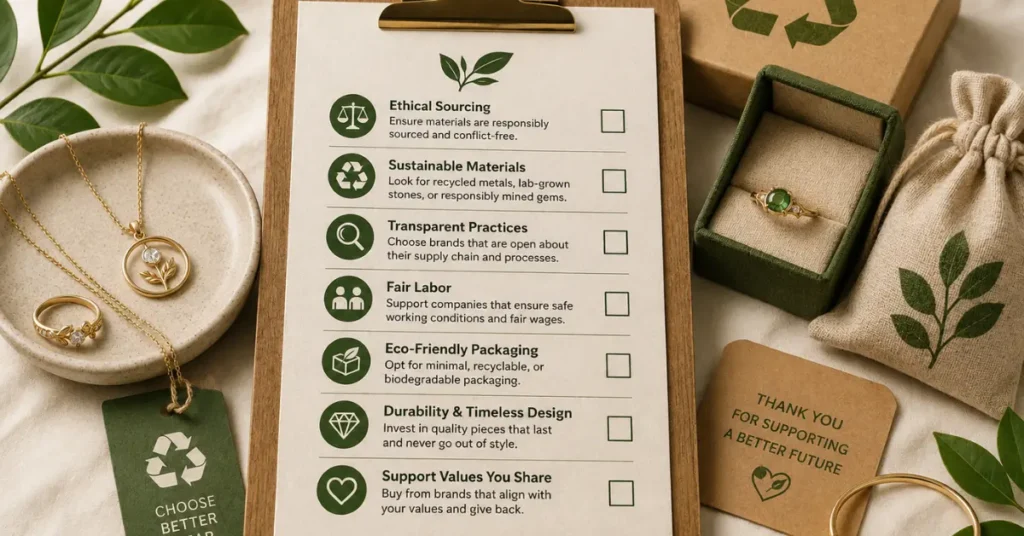
Before buying your next piece, consider this quick checklist:
- Check where the metals come from.
- Ask whether recycled metals are used.
- Investigate gemstone sourcing.
- Look for evidence behind sustainability claims.
- Consider ethical manufacturing practices.
- Choose durable, repairable jewelry.
- Check whether the brand offers recycling or take-back options.
- Consider the packaging.
- Compare transparency between different jewelry brands.
Final Thoughts
See whether the brand has a recycling program. Think of the packaging. Different kinds of transparency by different brands of jewelry. It is not that difficult to buy jewelry that is sustainable. One need not be aware of everything from mining to stones and production of jewelry prior to buying any jewelry.
Just ask some simple questions. Where do the components come from? Who made the jewelry? Any evidence that the product is indeed sustainable? What is the life span of the jewelry? What will happen to the item once you stop wearing it?
Maybe the above-mentioned questions can help you to go beyond the fancy terms used by marketers and purchase the jewelry responsibly. Whether you are looking for sustainable engagement rings, recycled gold necklaces, ethical earrings, or silver bracelets, conducting some research on the item can be an interesting shopping experience.
Frequently Asked Questions
Should recycled metals be used for sustainable jewelry?
Recycled metals may be a significant choice because the metal will be reused, and there will not be any further mining of the metals to use as raw material.
How do I identify sustainable jewelry?
Identify the specific information about the sourcing of materials, manufacturing processes, suppliers, certification, and sustainability of the organization, and don’t just consider broad terms like eco-friendly.