
The jewelry business has always been a combination of elegance and craftsmanship, using valuable materials. However, modern consumers tend to raise an essential question about where the materials used in jewelry making originate. In connection with the development of the sustainability concept, the issue of recycled metals in jewelry has gained significant importance since people began considering the possibility of not fully relying on the mining of new metal materials.
Metals such as gold, silver, and platinum can be obtained from existing items made from them and then reused. Jewelry companies as well as consumers interested in making more responsible choices have this chance. Recycled metals can be melted, refined, and transformed into beautiful new designs, making them an interesting option for both established brands and people exploring jewelry making with different metals.
What Are Recycled Metals?
Recycled metals are those metals that have been recovered from their original form in an existing product or manufacturing waste so they can be reused. Rather than obtaining the metals from mining operations, recyclers obtain and treat the metal already in existence and put it back into use. Understanding the composition of precious metals is important because alloys can affect both durability and skin compatibility, especially when choosing sterling silver jewelry and metal alloys.
Examples of recycled metals used in jewelry are:
- Recycled gold
- Recycled silver
- Recycled platinum
- Recycled palladium
- Recycled copper and brass in some cases
The exact nature of recycling will differ according to the metal as well as its origin, but the general principle remains the same: recycle, refine, and reuse.
Why Are Recycled Metals Important for Sustainable Jewelry?
Conventional mining may involve the expenditure of large quantities of energy, water, land, and infrastructure. Mining processes may have impacts on the environment and create waste. Recycled metal is yet another source of metal that doesn’t rely on further mining processes.
This means that the recycling of metals contributes to the development of the circular economy concept, which implies keeping valuable resources in circulation for as long as possible. Moreover, the introduction of recycled metals in jewelry companies can be helpful in achieving sustainability objectives.
Environmental Benefits of Recycled Metals
1. Reducing the Need for New Mining
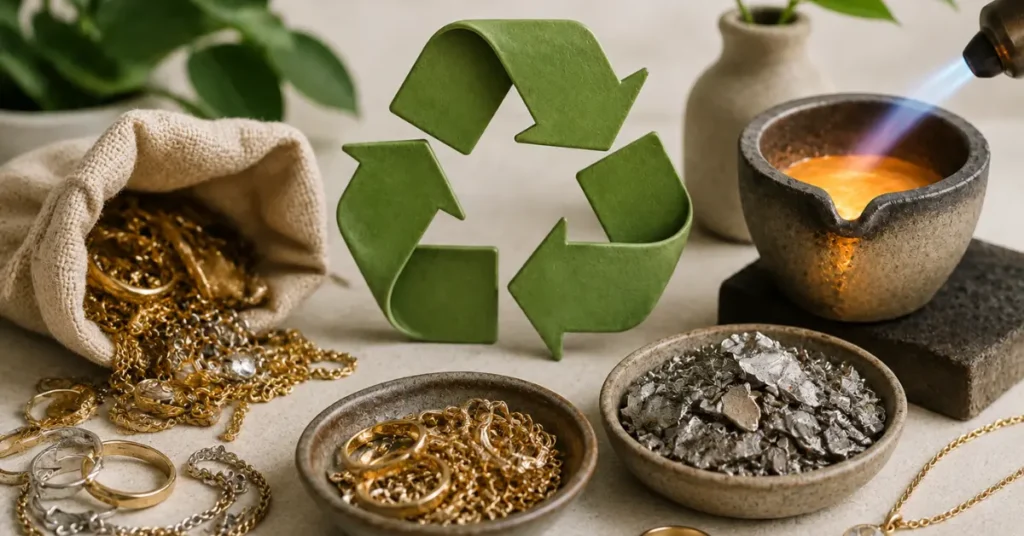
One of the biggest potential advantages of recycled metals is that they come from material that already exists. When metals are recovered and refined, they can be returned to the manufacturing cycle rather than automatically requiring new extraction. This can help reduce pressure on the demand for newly mined resources.
2. Making Better Use of Existing Resources
Metals like gold are robust materials that retain their value for decades. When an unwanted gold ring is no longer useful, there is no need for it to become waste. The metal it is made from can be recycled and converted back into something else. It is one of the primary principles of circular design – keeping valuable materials in use.
3. Supporting a Circular Economy
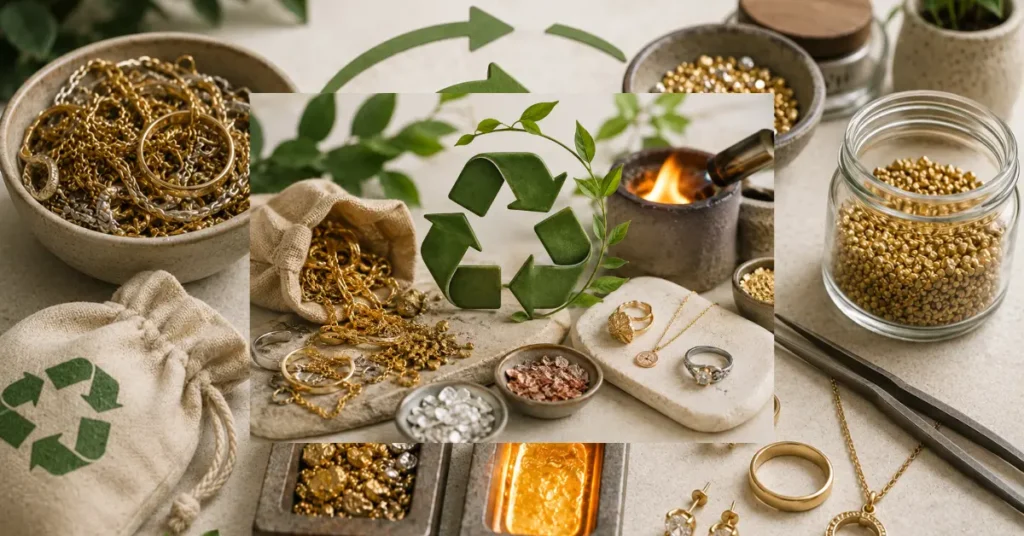
The linear model has a straightforward approach:
Extract – Produce – Use – Dispose
The Circular Model seeks to achieve:
Recover – Process – Produce – Use – Recover Again
Metal recycling easily fits into this second model, as this material can go through several product cycles.
4. Reducing Material Waste
Metal scrap may arise in the manufacturing process through activities like cutting, forming, polishing, and finishing. It would be unwise to discard this scrap metal as waste but rather collect and reuse it where necessary. This helps to keep the valuable metals within the production process.
What Types of Metals Can Be Recycled?
Recycled gold offers the same timeless beauty and can be used in rings, necklaces, bracelets, and other fine jewelry designs. Proper maintenance also helps preserve its appearance, so it is useful to understand how to care for gold jewelry.
Recycled Gold
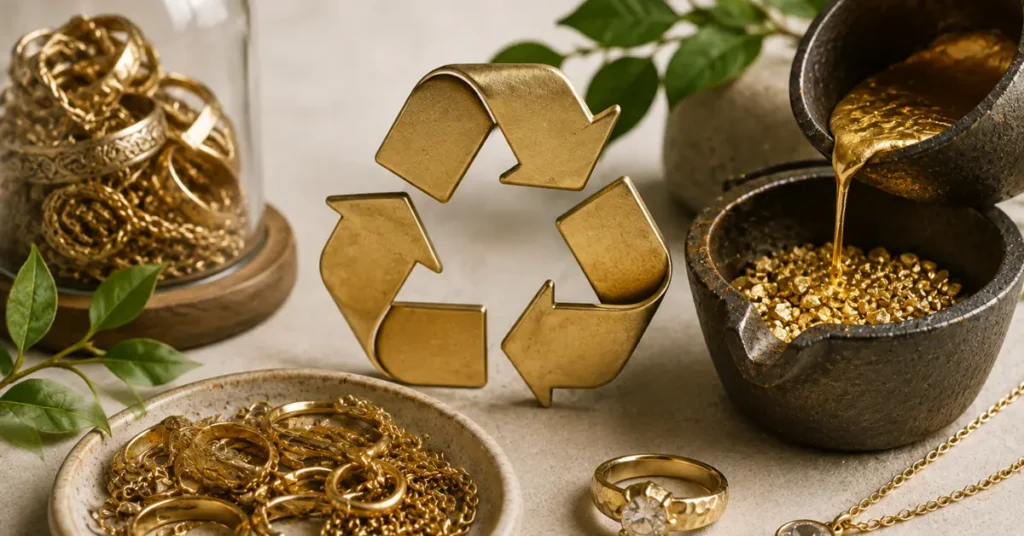
One material that is very good for recycling is gold, since it can be refined and recycled continuously. Recycled gold can be obtained from such items as old jewelry, industrial waste, and others that contain gold. The refined gold can then be used for the production of jewelry. Since gold will not lose its intrinsic material properties through recycling, it can become valuable even after many years.
Recycled Silver
Another example of a common jewelry metal that can be recycled and reused is silver. Recycled silver can come from old jewelry, industrial scraps, manufacturing scrap, and elsewhere. After being refined, it can be used to make new jewelry. Recycled sterling silver is another popular choice, but buyers should understand how silver alloys interact with the skin and compare gold vs sterling silver for sensitive skin before making a purchase.
Recycled Platinum
Platinum is valued for its durability, rarity, and use in fine jewelry. Platinum jewelry and manufacturing materials can be recovered and refined for future applications. Its long-term durability makes recycling particularly relevant to the concept of resource efficiency.
Recycled Palladium
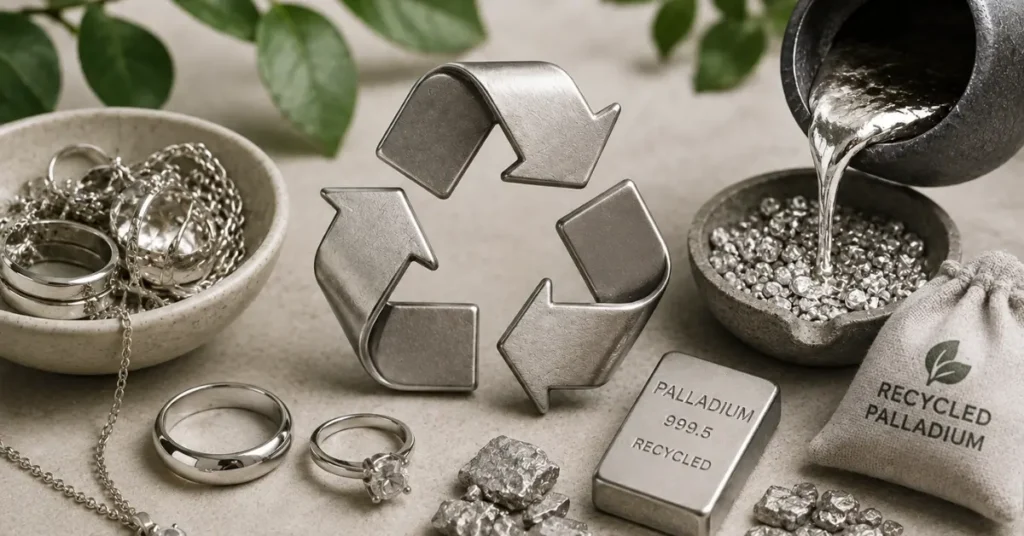
Palladium is yet another example of a valuable metal that can be recycled from pre-existing products and sources. Even though it is not as frequently used for jewelry as gold and silver, palladium can still be preserved through the process of recycling.
How Are Metals Recycled for Jewelry?
Recycling can take different routes based on the source and type of metal, but usually involves a number of steps. The safety of recycled metal jewelry depends more on its final composition and alloy than on whether the original metal was recycled. For example, understanding why sterling silver can sometimes turn your skin green can help buyers make better choices.
Step 1: Collection
Metals containing materials are retrieved from various sources, including jewelry, manufacturing waste, among others.
Step 2: Sorting
They are separated based on their metallic components. Sorting is very important because jewelry alloys consist of more than one metal.
Step 3: Processing and Refining
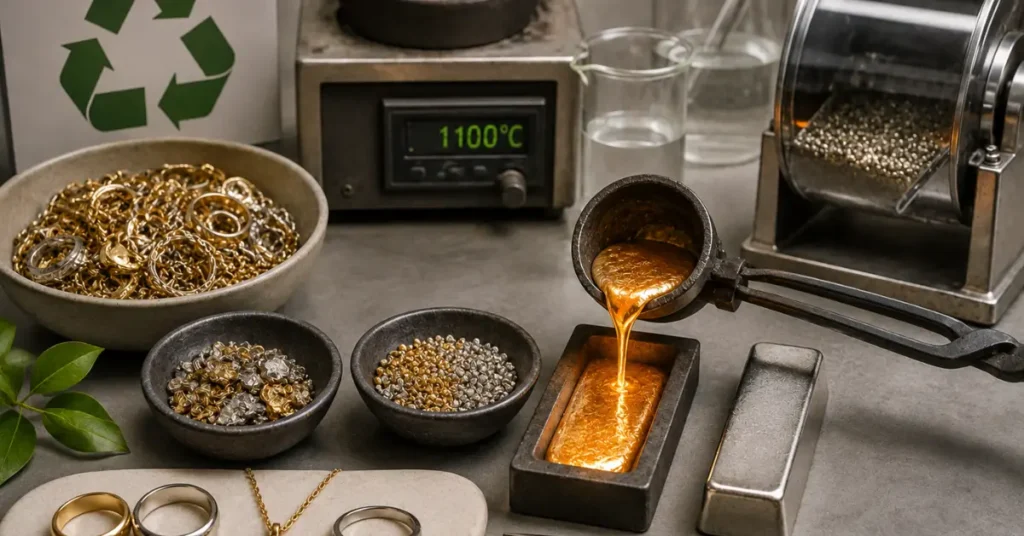
Processing is done on the collected material to extract the precious metals from any undesired material. Refining assists in making the metal of adequate purity and quality.
Step 4: Testing
The purified material may be analyzed to ascertain its composition and purity.
Step 5: Manufacturing
Once the metal has been prepared, it can be used to create new jewelry. The finished product may look completely new even though its material has previously been part of another product.
Is Recycled Gold Real Gold?
Of course. Recycled gold is also gold. What really matters is not the authenticity of gold, but its origin. Recycled gold has already been sourced from somewhere before and refined to be reused. If it has already been refined to satisfy the purity criteria necessary for making jewelry, there will be no problems.
Recycled Metals vs. Newly Mined Metals
The choice between recycled and newly mined metals is not always completely straightforward. Newly mined metals enter the supply chain through extraction, while recycled metals come from existing material. Recycling can reduce the need for additional extraction, but it still requires energy, transportation, processing, and refining.
For this reason, consumers should consider the entire supply chain, not simply whether a product is labeled “recycled. A responsible jewelry company should ideally provide clear information about its material sourcing, manufacturing practices, and relevant certifications.
Why Consumers Are Choosing Recycled Jewelry
Modern jewelry shoppers are looking at much more than aesthetics and cost when making their purchase decision. Other factors might include:
- Material origin
- Environmental consequences
- Ethical manufacturing
- Transparency
- Durability
- Corporate accountability
- Value retention
Jewelry made with recycled metal will be attractive to those who are conscious of these factors. For example, a ring made from recycled metal has just as much sentimental value as one created through traditional manufacturing processes.
Recycled Metals and Ethical Jewelry
Sustainability and ethics are closely connected, but they are not the same thing. Recycled metals address the question of where the material comes from, while ethical jewelry can involve many additional issues, including labor practices, supply-chain transparency, gemstone sourcing, and manufacturing conditions.
Therefore, choosing recycled metal does not automatically mean that every aspect of a jewelry product is ethical. Consumers should look at the broader practices of the jewelry brand.
How to Choose Jewelry Made With Recycled Metals
If you’re considering purchasing jewelry made of recycled metals, here are some questions that might be helpful:
- What kind of recycled metals do they use?
- Where did they get their recycled materials from?
- Are there any certifications for the recycled materials?
- What can the company tell you about their supply chain?
- How much of the metal in the product is recycled?
Is there any information regarding manufacturing practices?
The Role of Certification and Transparency
Certification may enable consumers to know the source and processes used to produce the materials. Certification procedures vary, and consumers need to find out what a certain certification entails.
Jewelry firms can increase transparency by providing information on:
- Composition of metals
- Recycled content
- Sources of refining
- Manufacturing locations
- Supply chain policies
- Relevant certifications
The more detailed the information, the easier it is for consumers to make decisions.
Can Recycled Metals Be Used in Luxury Jewelry?
Certainly.
Recycled metals are not restricted to cheap jewelry only. Recycled metals can be employed for crafting designer and luxury jewelry like engagement rings, wedding bands, and custom jewelry. The quality of the final product greatly depends upon the refining process, metal alloy, craftsmanship, and standards of manufacturing. So, a luxury item can have the best craftsmanship and recycled metal.
The Future of Recycled Metals in Jewelry
However, the future of jewelry will likely see design, technology, transparency, and accountability. As consumers become more interested in sustainability, organizations can research how they can encourage the recycling of metal products in an accountable way.
Conclusion: Why Recycled Metals Matter
Recycled metal is assisting in redesigning the future of jewelry.
Through the retrieval of materials from old products and waste from manufacturing processes, the jewelry industry will be able to ensure that the metals are cycled and decrease its reliance on newly extracted materials. Consumers of recycled metal jewelry are also presented with an opportunity to buy quality jewelry without compromising on the environmental aspect of the product.
Although the future of sustainable jewelry may not rely on a single practice alone, recycled metals have an important role to play in making the jewelry industry more circular and sustainable. With an ever-growing trend towards ethical jewelry, recycled metal jewelry may not only be an alternative but an increasingly significant component of jewelry making.
Frequently Asked Questions About Recycled Metals
Are metals that have been recycled good for use in jewelry?
Yes. Metals like gold, silver, platinum, among others can be refined and recycled to make good jewelry.
Is recycled gold of low quality compared to new gold?
Not always. This is because quality is dependent on factors like purity and refining processes, not simply on recycled metals.
Does recycled jewelry differ in appearance?
Not really. The result usually looks the same as jewelry that has been made using new metal.
Can recycled gold be recycled once again?
Yes. This is because gold is very durable and hence recyclable many times over.
Are metals that have been recycled good for use in jewelry?
Yes. Metals like gold, silver, platinum, among others can be refined and recycled to make good jewelry.
Is recycled gold of low quality compared to new gold?
Not always. This is because quality is dependent on factors like purity and refining processes, not simply on recycled metals.
Does recycled jewelry differ in appearance?
Not really. The result usually looks the same as jewelry that has been made using new metal.
Can recycled gold be recycled once again?
Yes. This is because gold is very durable and hence recyclable many times over.